Smoking is a personal choice, but how you smoke can affect the people around you more than you might realize. One common habit among smokers is blowing cigarette smoke downward, often believing it is more discreet or less harmful to others. In reality, this habit rarely has the intended effect. Smoke doesn't simply disappear when directed toward the ground. Instead, it behaves according to airflow, temperature, and surrounding conditions, often exposing nearby people to secondhand smoke anyway.
Understanding how smoke moves can help smokers make more considerate choices in shared spaces.
Smoke Doesn't Stay on the Ground
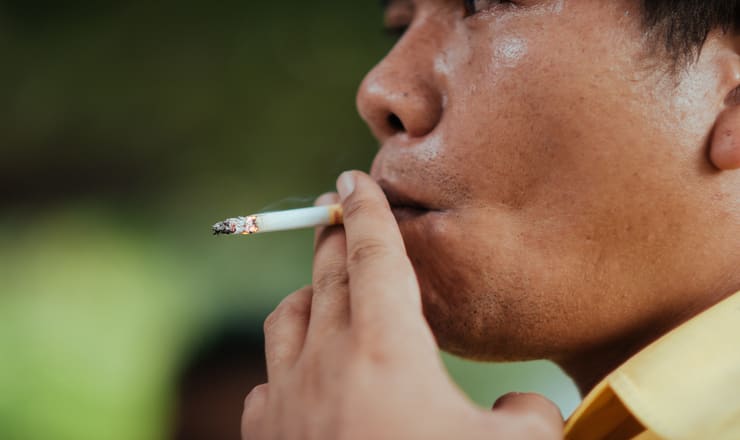
Many people assume that blowing smoke toward the floor keeps it away from others. However, cigarette smoke is made up of tiny particles and gases that quickly mix with the surrounding air. Once released, it spreads in every direction depending on air currents, ventilation, and movement of people nearby.
In indoor environments, smoke that is blown downward often rises back up or circulates throughout the room. Outdoors, even a light breeze can redirect the smoke toward nearby people within seconds.
In short, directing smoke downward does not prevent others from breathing it.
Secondhand Smoke Still Reaches Others
Secondhand smoke contains thousands of chemicals, including many known to be harmful. Whether smoke is blown upward, sideways, or downward, those chemicals remain in the air until they disperse or are removed through ventilation.
People standing nearby, especially children, elderly individuals, pregnant women, or those with asthma and respiratory conditions, may still inhale these particles without realizing it.
Blowing smoke downward may feel more polite, but it does little to reduce exposure for people around you.
Smoke Lingers Longer Than You Think
Another misconception is that smoke disappears immediately after being exhaled. In reality, smoke particles can remain suspended in the air for several minutes, particularly in enclosed spaces such as cafés, balconies, offices, or smoking zones with poor ventilation.
These particles can also settle on clothing, furniture, walls, and other surfaces. This residue, sometimes referred to as thirdhand smoke, can persist long after the visible smoke has vanished.
Courtesy Goes Beyond Direction
Being considerate while smoking isn't about the direction you exhale. It's about being aware of your surroundings.
If you're in a public place, simply blowing smoke downward doesn't guarantee the person next to you won't inhale it. Standing a little farther away from others, choosing designated smoking areas, and paying attention to wind direction are much more effective ways to minimize the impact on those nearby.
Respecting personal space is often appreciated more than any particular smoking technique.
Better Alternatives
If you choose to smoke, a few simple habits can make the experience safer and more comfortable for everyone:
- Smoke only in designated smoking areas.
- Keep a reasonable distance from non-smokers.
- Avoid smoking near entrances, waiting areas, or crowded places.
- Pay attention to wind direction when outdoors.
- Dispose of cigarette butts responsibly to keep public spaces clean.
These small actions can significantly reduce unwanted exposure for others.
Final Thoughts
Blowing smoke downward is a common habit based on the belief that it keeps smoke away from other people. Unfortunately, science tells a different story. Smoke naturally disperses throughout the surrounding air, regardless of the direction in which it is initially exhaled.
If you're going to smoke, the most considerate approach isn't changing the direction of the smoke. It's choosing where and when you smoke, maintaining distance from others, and being mindful of the environment around you. Small changes in behavior can go a long way in creating cleaner, healthier, and more respectful shared spaces.